Measuring Hydrogen Concentration: A Guide to Testing Accuracy
So, you’ve invested in a hydrogen water bottle or pitcher to enjoy the therapeutic benefits of molecular hydrogen (H₂). But how do you know if your device is actually delivering the therapeutic levels you need – typically above 1.5 ppm?
Not all testing tools are created equal. Some provide laboratory-grade precision, while others are little more than “marketing shortcuts”. Here is your guide to the most common methods for testing hydrogen water concentration, ranked by their accuracy and practicality.
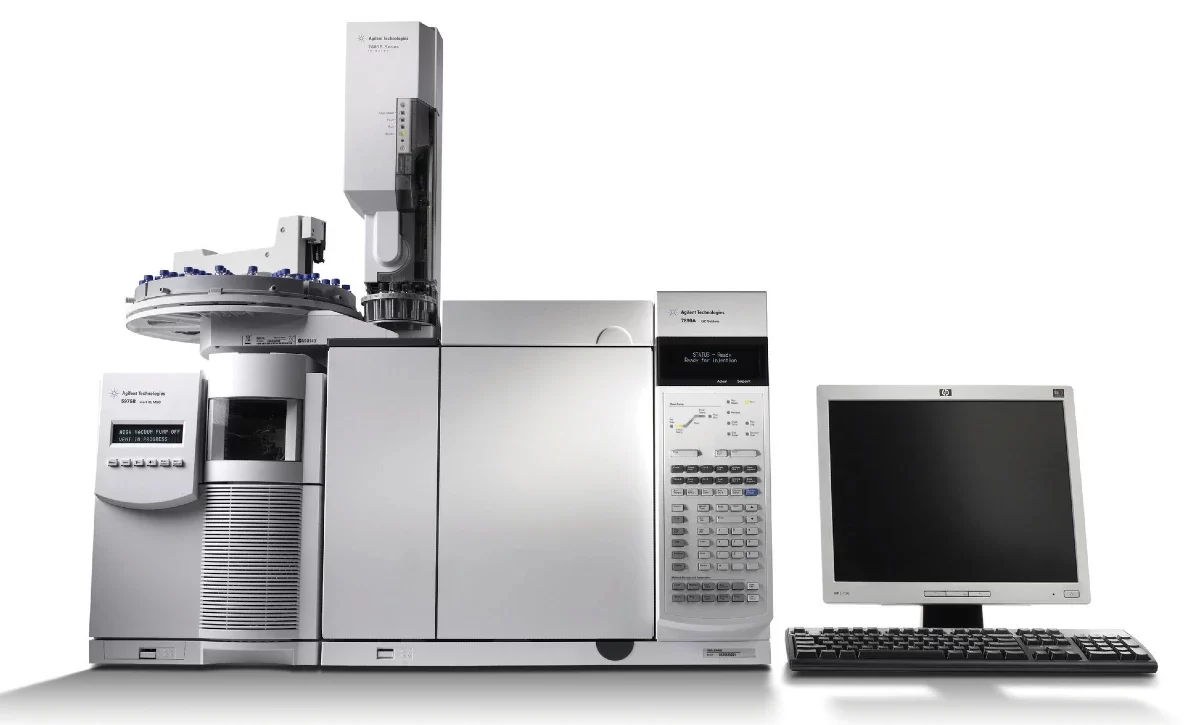
1. Gas Chromatography (GC): The Gold Standard
If you want the most accurate measurement possible, Gas Chromatography or GC is the heavyweight champion. This is a laboratory-grade technique that separates and directly measures hydrogen gas at the molecular level.
- How it works: A sample is injected into a GC system where an inert carrier gas pushes it through a column, separating the hydrogen from other substances for detection.
- Pros: It is highly reliable, traceable, and unaffected by water pH or mineral content.
- Cons: It is expensive and requires professional training, making it unsuitable for home use.
2. Electrochemical Sensors: Professional Monitoring
Devices like the UniSense H2 micro sensor or the KM2100DH provide real-time data without the need for reagents.
- UniSense: A high-end lab tool that detects hydrogen at the molecular level in real-time. It is highly accurate but can cost tens of thousands of dollars.
- KM2100DH: A polarographic membrane electrode that is reasonably accurate up to 2.0 mg/L. It is often used by researchers and advanced manufacturers but is less effective for high-concentration products.
This method of testing is used by H2Hubb, a trusted source for evaluating hydrogen products.
In the video below H2Hubb’s founder Tywon Hubbard explains how the various hydrogen testing method works and ranks them by accuracy.
3. Blue Reagent Drops (Titration): The Best Home Method
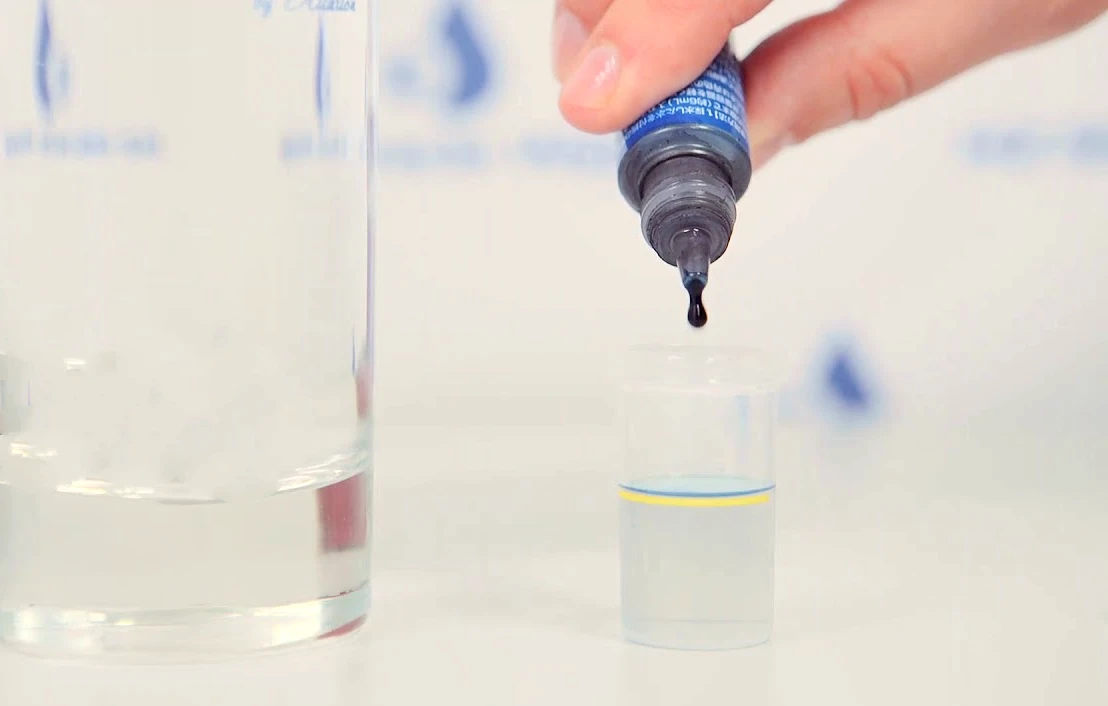
For everyday users, hydrogen test drops (specifically those using a methylene blue-platinum reagent) are the most practical and affordable tool.
- How it works: This method uses a chemical reaction called oxidimetry. In the presence of a platinum catalyst, dissolved hydrogen reacts with the blue methylene blue (MB) molecules, turning the solution colorless. You add the reagent drop by drop until the water stays blue; the number of drops tells you the concentration.
- Accuracy: When used correctly, these drops can be surprisingly accurate, falling within 2% to 10% of GC results.
- The Catch: This method is highly dependent on technique. Stirring too vigorously can cause up to 70% of the hydrogen gas to dissipate before you finish the test.
4. ORP Meters: Don’t Be Fooled
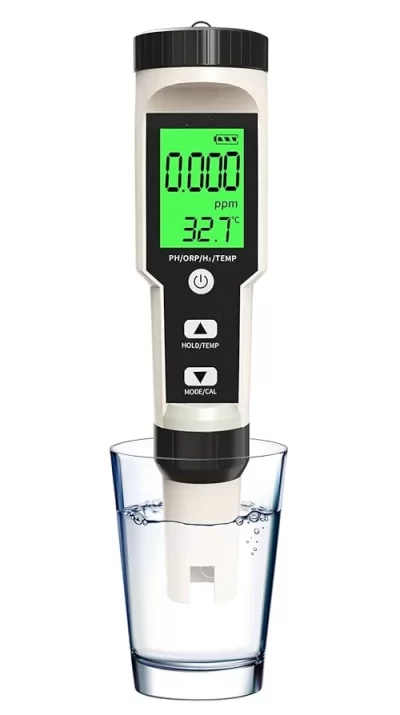
Many companies market Oxidation-Reduction Potential (ORP) meters as hydrogen testers, but this is misleading.
- The Problem: ORP meters measure electrical charge, not hydrogen gas concentration. While a negative ORP reading suggests antioxidant potential, it does not tell you the dose of hydrogen.
- Interference: Factors like pH, mineral content, and even dissolved oxygen can skew ORP readings. For example, alkaline ionized water can show a high negative ORP even with almost zero dissolved hydrogen.
Expert Tips for Testing at Home
To get the most reliable results with your reagent drops, follow these best practices:
- Test Immediately: Hydrogen levels drop quickly once the water is poured.
- Use Cold Water: H₂ dissipates faster in warm water.
- Avoid Agitation: Do not stir or shake the water vigorously, as this causes the gas to “off-gas” or dissipate.
- Clean Containers: Ensure your testing vial is free of soap or mineral residue, which can interfere with the chemistry.
ZYNAFLO’s H2-Max Hydrogen Water Bottle has been lab tested and certified to produce more than 6 PPM (or 6000 PPB) by H2Analytics and H2Hubb using GC and UniSense Electrochemical test methods. Read the test reports below:
- H2Analytics test report (PDF)
- H2Hubb test report (PDF)
How long does hydrogen stay dissolved in an open container?
The hydrogen molecule is the smallest element in the universe. It is extremely volatile and dissipates very quickly when exposed to the air. In an open container, dissolved hydrogen may only last a few minutes.
By comparison, hydrogen water kept in a closed bottle typically lasts longer, generally between 1 to 2 hours.
Several factors influence how quickly the hydrogen levels will drop in an open container:
- Agitation and Stirring: Moving the water significantly accelerates “off-gassing.” Even stirring slowly can cause you to lose up to 70% of the hydrogen gas almost immediately.
- Temperature: Hydrogen dissipates faster in warm water because the molecules move more rapidly. Using cold water can help slow down this process.
- Surface Area and Transfer: The mere act of pouring water from a generator into a glass or testing vial causes hydrogen to begin escaping. This is why researchers and manufacturers emphasize that hydrogen-rich water should be consumed or tested immediately after generation to ensure you are receiving a therapeutic dose (typically above 1.0 ppm).
Because hydrogen is the lightest gas, it naturally seeks to escape the liquid and return to a gaseous state, especially when there is no lid to provide pressure or a barrier. For this reason, many high-quality hydrogenators are designed for longer hydrogen retention.